- Toppits® SafeLoc® freezer bags 1 L or Toppits® SafeLoc® Mini
- Bowl
- Fork or whisk
- and of course eggs
Store eggs cleverly instead of wasting them
Cake and biscuit bakers are probably familiar with the situation: the cake is in the oven and there is still an egg white or yolk left. Instead of throwing it away, it can be frozen and used at a later date.
Share this tip with friends:
- Toppits® SafeLoc® freezer bags 1 L or Toppits® SafeLoc® Mini
- Bowl
- Fork or whisk
- and of course eggs
Unfortunately, raw eggs in the shell cannot be frozen. The liquid in the egg would expand when frozen and cause the egg to burst. Freezing is also not recommended for boiled eggs. They lose their taste and get a rubbery and chewy consistency.
But egg whites or egg yolks that are left over from baking, for example, can be frozen without any problems. And of course, whole raw eggs can also be frozen without shells.
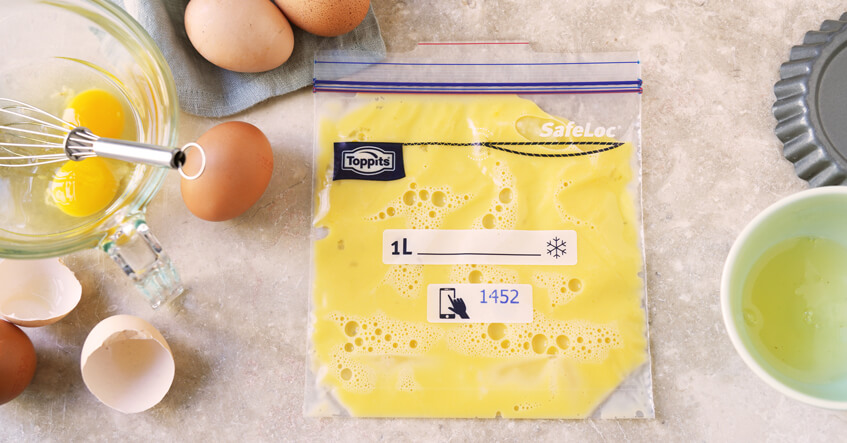
If you want to freeze raw egg whites (also called egg whites) or yolks, simply put them in a suitable freezer bag and freeze the egg for the next opportunity. Complete eggs are simply whisked with a fork or whisk and then frozen as an egg mixture.
In all cases, it is worthwhile to note on the freezer bag how many eggs are in the bag, after a few weeks you can often no longer remember so well and the scales only help to a limited extent.
After the egg mixture, egg yolks or egg whites have been filled into a Toppits® freezer bag , carefully brush the air out of the bag and seal the freezer bags airtight. The eggs are now ready for the freezer.
It is best to defrost the frozen eggs in the refrigerator. This will keep the eggs cool and fresh. Then use the eggs as usual, for example for cakes and biscuits or for a hearty scrambled egg or omelette.
In our tests, frozen and thawed egg whites could also be whipped until stiff with a pinch of salt and baked into small meringue tuffs. The beaten egg whites only took a little longer to whip and were a little softer.
Frozen eggs can be kept in the freezer for up to 8 months, and egg whites for up to 10 months. And so that the eggs are not forgotten in the freezer, the Toppits® Foodsaver app reminds us to use them in time.
Freezing eggs – the right way
Sometimes egg whites or yolks are left over during baking or cooking, and then the question arises: how do you best use it? Freezing is a practical solution to make eggs last longer. But eggs can't be frozen in every state – there are a few important tips to look out for.
Which eggs can be frozen?
Raw eggs in the shell or boiled eggs should not be frozen, as they lose their consistency when thawed and can become inedible. However, egg whites and yolks can be frozen without any problems. You can even freeze whole raw eggs without shells by cracking them first.
How to prepare eggs for freezing
To freeze eggs, whip the egg whites or yolks and place them in a Toppits® SafeLoc® freezer bag. You can also whisk whole eggs and then freeze them as egg mixtures. It is important to note on the bag how many eggs there are in it. Then squeeze the air out of the bag, seal it and place it in the freezer.
How long do frozen eggs last?
Frozen eggs can be kept in the freezer for up to 8 months. Egg whites even stay fresh for up to 10 months. To use them, simply thaw the eggs in the refrigerator and use them like fresh eggs, for example for cakes, cookies or scrambled eggs.
With the Toppits® Foodsaver app, you can keep track of your frozen food.
Simply scan the freshness code on the Toppits® freezer bags and save everything in the app.
So you always know what's in the freezer – even when you're on the go.
This saves time, money and prevents food waste.