Toppits® Cling Film

How to keep your food fresh for longer

The self-adhesive Toppits® cling film keeps food fresh for longer, thanks to its 3-layer special film. The Easy-Cut system® ensures easy tearing, and the clever packaging makes it easy to handle.


  • Easy-cut system® and ergonomic packaging for extra easy tearing off
  • Self-adhesive, supple 3-layer special film helps to preserve the taste and nutrients of food for longer
  • Practical initial finder for better handling 
  • Hygienic click-closure pack
  • Integrated roll holder – fixes the roll in the pack
  • Manufactured using recycled residues

Tips for using cling film

Toppits® Cling Film

Preserve freshness, avoid odours, pack neatly

The transparent Toppits® cling film is a real all-purpose solution for the kitchen and beyond. Leftover food such as vegetables, meat or pasta can be easily covered and stored in the refrigerator, so that it remains fresh and edible in the following days. Foods stored open, on the other hand, dry out quickly and lose their quality - this is prevented with cling film. It also protects against unpleasant odors in the refrigerator: simply wrap cheese and other intensely fragrant foods well, and other foods remain tasteless. The film is also ideal for on the go - be it at a summer brunch or picnic to keep food fresh and protected. Toppits® cling film not only helps to make food last longer, but you can also do something good for the environment by not throwing away the food prematurely.

Green cable plugged into a white socket on a wall made of lawn

Our contribution towards a circular economy

Some of our Toppits® products are made using recycled resources

We have already taken a step in this direction, as many of our products – such as cling film, SafeLoc® freezer bags and Zipper® bags – are partially made from reprocessed residual materials.

So when you buy them, you are not only helping to keep food fresh for longer, but also contributing to the conservation of valuable raw materials.


Thanks to their protective properties, our Toppits® products also help reduce food waste – very much in line with ‘Save Food’.


In this way, we want to contribute to a circular economy in which materials are reused as much as possible.


Available sizes


Your questions – our answers

Cling film is an everyday companion in many households. Why? Because it is easy to keep food fresh for longer with cling film. But with the use of the thin film, the question often arises as to how to dispose of it correctly.


The correct disposal of cling film 

Especially in the case of materials that come into contact with food during use, it is sometimes not entirely clear in which waste it is disposed of. In general, however, it is said that plastic packaging belongs in the recycling collection. The safest way to find out how little contaminated cling film can be disposed  of is directly from the local disposal company in your city. As a rule of thumb, if only packaging is collected (as is the case in Germany with the yellow bin/yellow bag), the cling film belongs in the residual waste. If all types of recyclables, such as metals and plastics, are collected, the cling film may be collected in the recyclable materials collection.  


When does cling film belong in the residual waste bin?

If recyclables are not collected separately in your city or if the cling film is dirty, it is better to dispose of it in the residual waste . Heavy soiling can be caused, for example, by greasy food residues that stick very much to the film. In this case, waste management companies recommend disposal via the residual waste collection, as the film, which is heavily contaminated with food scraps, would otherwise be sorted out in the waste sorting plant within the recycling process anyway and fed to the incinerator.


Toppits® cling film – sustainable use and disposal

Sustainability is an important issue, as is the case with the use of cling film and other packaging materials. Toppits ® cling film is already made from 35% recycled residues . These resources are, for example, organic residues from the food cycle that are harmless for the storage of food. You can find out more about this and the mass balance approach used here. Especially with regard to the topics of sustainability and recycling, there will also be further developments in the future and the goal of steadily increasing the proportion of recycling. The correct disposal of cling film and the conscious use of the useful everyday helpers is a supportive step in everyday life to steadily increase the sustainability of corresponding products and to make a large and important contribution to the circular economy .

For us, sustainable household items are products that have a very low impact on the environment. To meet this requirement, we are working on fully integrating our entire product portfolio into the circular economy in the future. This means that we will no longer need new fossil raw materials to manufacture our products and the products will be made exclusively from recycled or renewable materials and can be fully recycled or composted after use. You can find out more about our sustainability approach at Toppits here®.


The Toppits® portfolio already includes many products that can be used several times. Our Toppits® freezer bags and zippers® are not only real all-rounders, but can also be reused several times thanks to their robust quality.


We are convinced that it is important for truly sustainable household items to become part of the circular economy. In the circular economy model, existing materials and products are reused and recycled for as long as possible to extend the life cycle of the materials. We therefore not only ensure that our products are made from sustainable resources , but that the products can also be used as raw materials for new products after use. In this way, waste can be reduced to a minimum and resources can be reprocessed.


Does the circular economy avoid plastic waste?

In the circular economy , plastic waste is a valuable resource for the production of new, sustainable products. Recycling starts at home. For example, if a Toppits® freezer bag has reached its lifespan and is about to be disposed of, it is important to dispose of it properly so that it can be returned to the cycle. If you are not sure how to recycle your Toppits® products properly, contact your local waste management company. Here you can find more information about the importance of recycling.


Are the products more environmentally friendly through recycling? 

In order to make our household products more sustainable and environmentally friendly, we strive to use recycled or renewable raw materials in production. By using non-fossil raw materials , we can reduce the use of fossil raw materials such as crude oil and thus make an important contribution to a more sustainable household.


Why aren't new Toppits products made from old Toppits® ® products?

The majority of our products are already made with 35% processed residues . These resources are, for example, organic residues from the food cycle that are harmless for food storage. This means that some of the raw materials consist of residues in order to reduce the use of petroleum-based raw materials. You can find out more about this topic and the mass balance approach used here.


In addition, the majority of the Toppit® portfolio is recyclable. According to the current state of the art, no new products with food contact can yet be made from it, because in order to ensure safety in food contact, the requirements for this type of recycling are even higher. However, if disposed of correctly, the single-origin film of our products could be processed into high-quality new garbage bags, for example.

Toppit's® products help to protect food and make it last longer. In addition, we have made it our mission to give tips on how to store food properly and how to extend the shelf life of vegetables, meat and co. in order to support you in ensuring that no food is wasted. Our recipes also contain many tips on the culinary use of food leftovers.


How does Toppits® help save food?

On our "Tips & Tricks" page, there are many articles that help you waste less food. Many of our articles revolve around the topic of freezing and storing food in the freezer. But you can also find tips on how to store it correctly in the refrigerator. The following applies to everything: Properly stored, food lasts much longer – whether in the freezer or in the refrigerator. With the right knowledge, saving food can be done in no time at all. Click here for our tips & tricks!


Avoid food waste with the Toppits® Foodsaver app 

Freezing food is an effective measure when it comes to saving prepared food, fruits and vegetables – but the problem is that nothing lasts forever in the freezer either.


Toppits® Foodsaver app helps you keep track of everything in the freezer so that nothing is forgotten and food doesn't have to be thrown away. With the free Foodsaver app , every frozen food can be recorded - so you always keep track of everything and know what's going to happen next. Together with the Toppits® freezer bags and the 1L SafeLoc® freezer bags with pre-printed freshness codes , the Foodsaver app makes an unbeatable team against food waste.


Saving overripe fruit with simple tricks 

Especially on warm days in summer, it can quickly happen that overripe fruit goes bad more quickly and has to be thrown away. But with simple tricks, delicious berries, juicy melons etc. can be saved before it's too late! Most fruits can be kept frozen for up to a year - so you can enjoy sweet delicacies even in winter. All tips for freezing fresh fruit can be found here.


Toppits® supports the initiative "Don't throw me away" 

The initiative "Don't throw me away" (WMNW) is a project of the Hollen Environmental Centre and has been supported by Toppits® since 2015. The initiative visits primary schools throughout Germany and uses helpful materials to provide information about the topic of food waste in a playful way. The children also receive practical tips on how to use food in a resource-saving way from the initiative.  

We believe that the circular economy is a significant contribution to a more sustainable world. An important part of the circular economy is recycling, i.e. the preparation of recyclable materials for a new purpose. We want our products not only to be made from sustainable resources, but also to be able to serve as raw materials for new products at the end of their use, thus optimally integrating into the recycling cycle.


Recycling as part of the circular economy 

Three factors play an important role in ensuring recycling as part of the circular economy: the progress of recycling technologies, the possibility of recyclable disposal and the recyclability of the materials used. As a producer, we have the most influence on the latter and are therefore working particularly on the recyclability of our own products.


Recyclable materials 

Whether a product is recyclable currently depends in particular on its material composition. The purer the material, the better it can be recycled. This applies, for example, to the aluminum we use in our aluminum foil. For many plastics, this is somewhat more complex and can be roughly divided into three groups.


Recycling of plastics 

The first group is plastics, which are easy to sort and recycle and are therefore primarily used.


The plastics in the second group could theoretically be recycled, but due to their low abundance, they will not.


The plastics that cannot be recycled because their chemical and physical properties do not yet allow this form the third group. We therefore classify only the first group as recyclable.


Recycling at Toppits®

An example of the first group of plastics is the material in our cling film: Some cling films are made of multi-layer films that are difficult to recycle or non-recyclable plastics are used. The Toppits® cling film is made of polyethylene, a highly recyclable plastic that requires few additives.


We are constantly working to increase the proportion of easily sortable and recyclable plastics in our portfolio and, in turn, to reduce poorly recyclable plastic products, indeed all materials that are difficult to recycle. In this way, we want to promote the circular economy and make our contribution to reducing the incineration or landfilling of valuable raw materials.


Recycling of aluminium products

All Toppits® aluminium products are fully recyclable, as the aluminium used is particularly pure and not contaminated with other materials. Since aluminium is a very valuable material, the collection and recycling of aluminium is very important not only for the circular economy, but also from an economic point of view. In addition, using recycled material can save a lot of energy compared to new aluminium.


You can support recycling when disposing of aluminium:


  • Press your aluminum foil or aluminum shell together: this will help sort the material
  • Ask your local disposal company how best to dispose of the products
  • Heavily contaminated material (for example, completely covered with adhering food residues) should be disposed of in the residual waste


Tips to support our recycling processes 

You can also support us in this: Just as important as the selection of recyclable materials is the correct disposal of our products after use. Throughout Europe, not only every country, but also every region has different disposal systems and guidelines. The countries also treat the topic of recycling differently. Find out about the local recycling recommendations from your waste management company or district administration and dispose of our products accordingly so that as much as possible can be recycled!

In general, cling film is not heat-resistant and should not be used in an oven in any way, as it can melt and the food can then no longer be consumed. However, there are various alternative products that are more heat-resistant and are therefore suitable for use in the microwave, for example, such as the microwave film from Toppits®.


Heat resistance in cling film 

The heat resistance of cling film is not designed for use in the oven. It is therefore advisable to use other types of foil that can withstand higher temperatures. Aluminum foil is particularly tear-resistant and heat-resistant. Accordingly, it is the perfect choice when it comes to cooking, baking, frying, grilling and keeping fresh.


Which film is suitable for heating food? 

For heating food in the microwave, the microwave film 2in1 from Toppits® is ideal. Just like a cling film, the microwave film 2in1 also keeps the food optimally fresh. In addition, this special film is microwave safe. When heating food in the microwave, the film can therefore be used without any problems. At the same time, it acts as an effective splash guard, so that the microwave always remains nice and clean after heating the food.


Heat resistance as an indication of use

All films have a label on the packaging for heat resistance. Here it is important to maintain the maximum temperature of heat resistance. Cling film is therefore out of the question for use in the oven. The use of unsuitable cling film can produce harmful fumes that make food inedible.


By observing the labelling and using the different films correctly, nothing stands in the way of the simple and safe preparation of food.

Have more questions? Check out our FAQs to find answers.


To the FAQs


You might also be interested in these products

Sandwich Paper: Freshness & Protection | Toppits®

Toppits® sandwich paper: The classic for fresh sandwiches! ✓ Greaseproof & tear-resistant ✓ From sustainable sources. » Ideal for school & office! Buy now!

Microwave Foil 2in1 – Versatile & Practical | Toppits®

Preserve freshness & heat food safely! ✓ Prevents dehydration & splashes ✓ Ideal for refrigerator & microwave » Learn more now

Toppits® Cling Film: Keeping Fresh Made Easy!

Toppits® cling film for food that stays fresh for longer! ✓ Self-adhesive & cuddly ✓ Easy-Cut system® for easy tearing off » Discover now!

You might also be interested in these recipes & tips

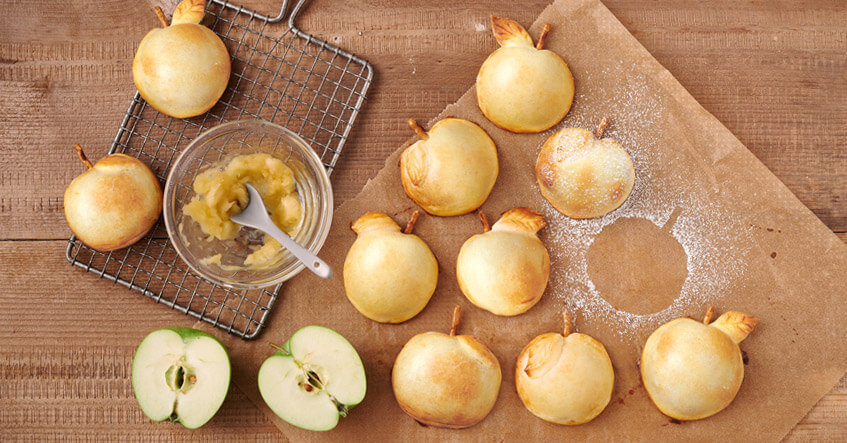
Apple Dumpling Recipe: Easy & Delicious Baking! | Toppits®

The best apple turnover recipe! ✓ Juicy, crumbly dough, fruity filling & easy preparation. ✓ Step-by-step instructions + tips. » Discover now!

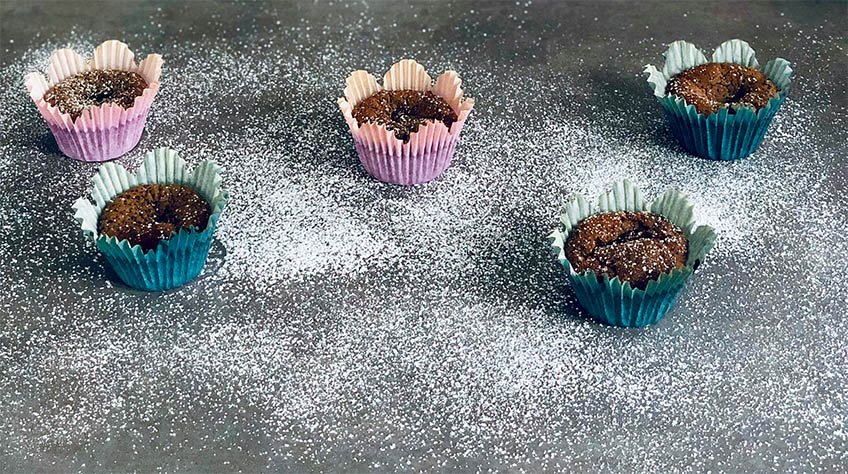
Chocolate Muffins with Liquid Core Recipe | Toppits®

Easy recipe for chocolate muffins with a liquid core! ✓ Quick to prepare & irresistibly delicious. ✓ Tips & Tricks » Bake now!

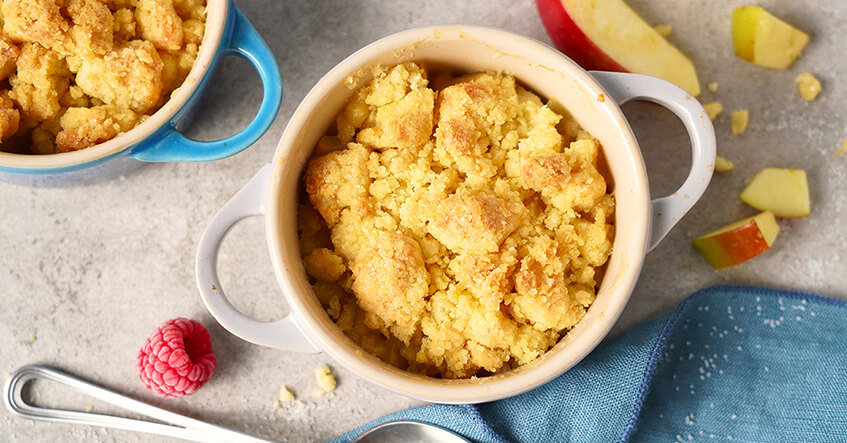
Fruit Crumble Recipe from Leftover Leftovers | Toppits®

Looking for a delicious fruit crumble recipe? ✓ Quick to prepare with fruit leftovers. ✓ Variable with any fruit! Simple recipe for young and old. » Learn more!