Indications for use:
1. Aluminum foils are not suitable for covering food in metal containers. 2. Aluminum foils must not come into contact with acidic or salty foods. 3. The foils may dissolve in these cases. Do not use in the microwave.
Toppits® aluminum foil protects taste and nutrients, is particularly tear-resistant and heat-resistant thanks to double-kraft honeycombs®. The Easy-Cut system® allows easy tearing.
Perfect for barbecue fans – succulent food and clean grill!
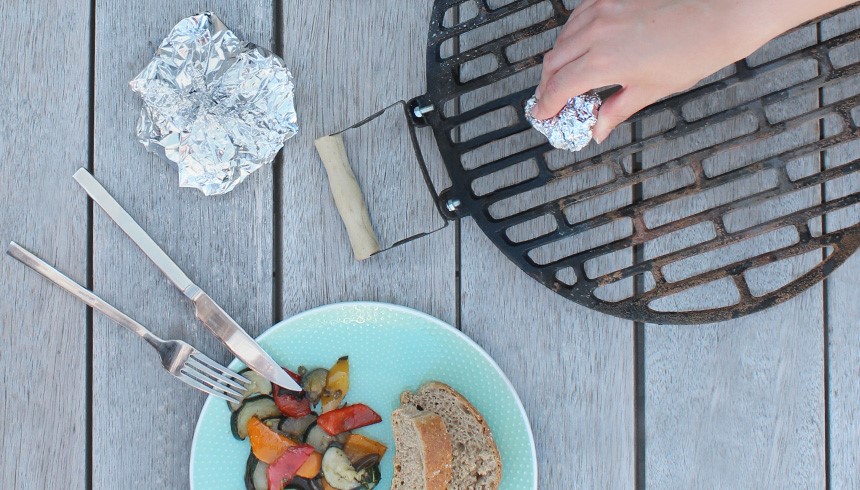
When grilling, aluminum foil ensures aromatic and perfectly cooked food. Whether tender fish fillet, spicy steak or crunchy grilled vegetables - wrapped in foil, taste and juiciness are retained because the heat is evenly distributed. In addition, the aluminum foil protects the grill from dripping fat or marinade, which not only reduces smoke development, but also facilitates subsequent cleaning. The method is particularly practical for sensitive foods that otherwise quickly fall apart or stick to the grill grate.
If you want to enjoy potatoes particularly soft and juicy, you can wrap them in foil with a little butter and herbs and place them directly in the embers.
Important: Do not season potatoes with salt, as aluminum foil should not come into contact with salt and acid.
It doesn't matter whether the glossy or matt side is on the outside - both work perfectly. With these simple tricks, grilling will not only be a highlight in terms of taste, but also much cleaner and less complicated.
Indications for use:
1. Aluminum foils are not suitable for covering food in metal containers. 2. Aluminum foils must not come into contact with acidic or salty foods. 3. The foils may dissolve in these cases. Do not use in the microwave.
Easy to handle
With the Easy-Cut system, separating the film is child's play
double-Strength honeycombs
Thanks to the double-strength honeycombs, it is particularly tear-resistant and dimensionally stable
100% recyclable
Our aluminum foil is 100% recyclable
(please refer to your local disposal company)
Wirf mich nicht weg!
We are a proud partner of the "Wirf mich nicht weg!" initiative, which is committed to combating food waste. Together, we are committed to a sustainable lifestyle. Join us!
Practical kitchen helper for everyday life
Aluminium foil can do much more than just keep food fresh. It is a real all-rounder in the kitchen - whether for cooking, grilling, freezing or covering. When cooking, it helps to distribute heat evenly and to prepare food that is particularly juicy and aromatic. Fish, meat or vegetables can be gently cooked in their own juice - without any additional fat.
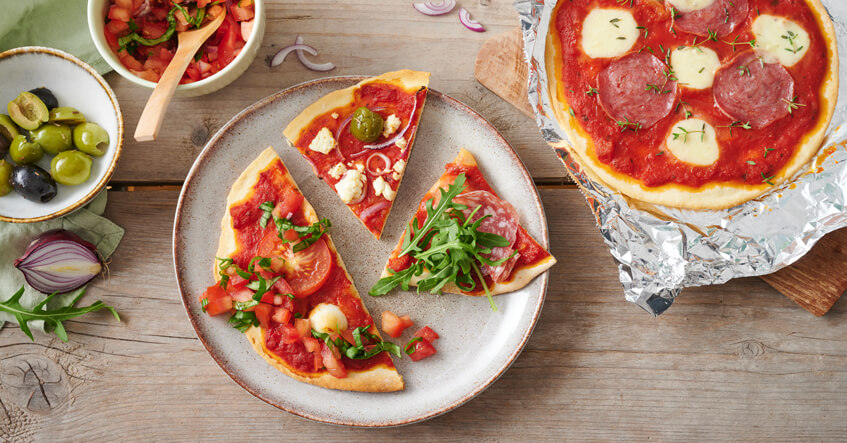
Aluminum foil also protects sensitive ingredients from drying out or burning when grilling. Practical: Aluminum foil can be formed into any shape in just a few simple steps - ideal for covering bowls, packing sandwiches or as a base for baking.
In short: Aluminium foil is a versatile kitchen helper that saves time in everyday life, preserves quality and scores just as well in preparation as in storage.
Aluminum foil
Length
10 m
Width
29 cm
Aluminum foil
Refill Roll
Length
10 m
Width
29 cm
Aluminum foil
Storage pack
Length
24 m
Width
29 cm
Aluminum foil XL
Professional
Length
150 m
Width
44 cm
Aluminum foil
Professional
Length
200 m
Width
29 cm
Aluminium foil – in which bin? Does the everyday helper belong in the residual waste or recyclable material collection? In general, aluminium is a valuable raw material and should therefore be disposed of in the recycling bin. The safest way to find out how little contaminated aluminium foil can be disposed of in your city is directly from your disposal company. If recyclables are not collected separately in your city or if the aluminium foil is heavily soiled, it is better to dispose of it in the residual waste . Heavy soiling can be caused, for example, by greasy food residues that stick very much to the foil. In this case, waste management companies recommend disposing of aluminium foil via the residual waste collection.
In order to derive the correct disposal of aluminum foil yourself, it is best to take a look at what the aluminum foil is actually made of. Aluminum foil consists of aluminum and additives of high quality. Aluminum foil is 100% recyclable and should be collected from recyclables if possible. Thus, the disposal of the aluminum foil via the recycling bin is correct. A little tip: After use, shape the aluminum foil into a ball so that the disposal companies recognize it more easily.
Toppits® aluminium foil, like other aluminium products from Toppits®, belongs in the recycling collection. Why is that? Many everyday packaging is covered with aluminium foil.
These include, for example:
Due to the recyclability of aluminium foil, aluminium foil should also be collected from recyclables if possible.
Toppits ® aluminium foil is available in the normal version or as aluminium foil XL. All everyday helpers can be used for the preparation, storage and/or safe packaging of food. Toppits® aluminium foil gets its special structure from the double-power honeycombs, which are achieved by a two-layer rolling. In addition, Toppits® aluminium foil has a special alloy and is therefore particularly tear-resistant and heat-resistant. Due to their reliable strength, Toppits ® aluminium products can often be used several times. Toppit's® grill trays and express grill pans in particular can often be reused, as they are particularly stable. If the aluminium foils or grill trays are no longer to be reused and disposed of, they belong in the recyclable material collection, from where the recycling process begins and the cycle continues.
Food is often prepared wrapped in aluminum foil and exposed to a higher temperature. Is health impaired if food is prepared in close contact with aluminum foil? Is the consumption of aluminum foil unhealthy? In principle, the preparation of food in aluminum foil is harmless. However, there are a few instructions for use to be able to prepare and enjoy the food practically wrapped in aluminum foil.
The advantages of aluminum foil in the kitchen are great and versatile. Food can be prepared gently in it. Whether fish, meat or grilled vegetables - thanks to the preparation in aluminum foil from Toppits® , meals are cooked perfectly and many ingredients are retained that would be lost in open preparation.
Aluminum foil is also ideal for storing food: By covering bowls with aluminum foil or wrapping food in them, the food is prevented from drying out and the decay of the ingredients is reduced. This keeps food fresh longer and prevents it from being thrown away.
As a versatile helper, aluminum foil is therefore an indispensable part of any kitchen. Nevertheless, there are some points to consider when using the all-rounder. We explain what they are.
Acidic and salty foods are a special case when dealing with aluminium foil. If these foods come into contact with aluminium foil, the foil can visibly discolour and aluminium can be dissolved from the foil. As a result, slightly more aluminium than usual can be released into the food.
Although aluminum already occurs naturally in numerous foods, too much of the metal can be unhealthy for humans.
When packaging and preparing food with aluminum foil, it is therefore important to make sure that it is not salty or acidic food. For example, a fish in lemon juice should not be brought into contact with aluminum.
For the preparation of meat or grilled vegetables, for example, this means simply salting the food only after the cooking process. This way, you can avoid any risks without any fuss.
Instead, Toppit's® cling film is an excellent alternative for storing salty or acidic foods. This means that even salty and sour foods stay fresh – without any risk.
But of course the question remains: How much aluminum can a person absorb without risk?
The European Food Safety Authority recommends not consuming more than one milligram of aluminium per week and per kilogram of body weight. At 70 kg, no more than 70 milligrams of aluminium should be ingested.
This amount is only achieved by using aluminum foil when food is particularly acidic or salty, as these substances can dissolve aluminum from the foil through chemical reactions. If this contact is avoided, no problems arise.
All other foods can be packed and prepared in aluminum foil without hesitation, as they are not able to remove harmful cans of aluminum from the foil. So nothing stands in the way of wrapping and preparing delicious food in aluminum foil in the future.